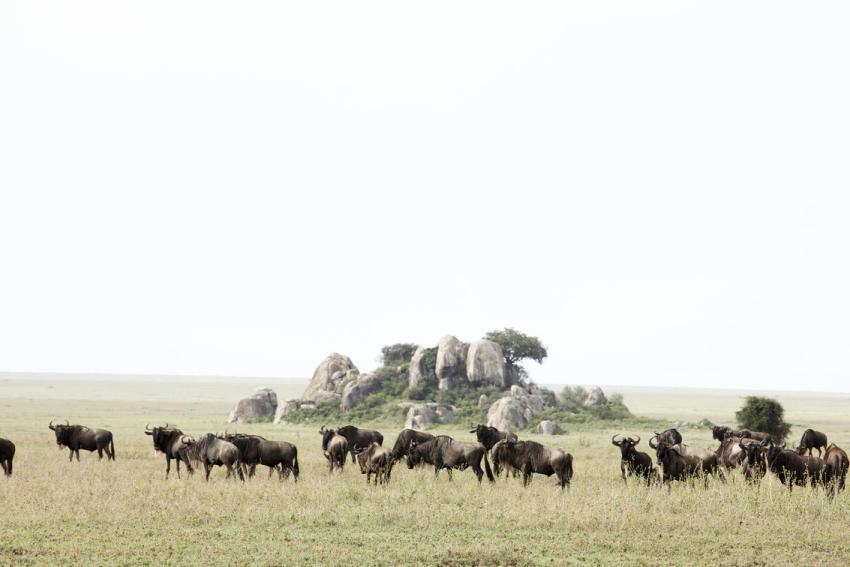
Every year, roughly two million wildebeest, zebras, and gazelles embark on an 800-kilometre loop through the Serengeti ecosystem crossing crocodile-infested rivers, outrunning lions and cheetahs, and following ancient instincts toward rain and fresh grass. This is the Great Wildebeest Migration: the largest terrestrial mammal migration on Earth, and the single most requested wildlife experience among our guests at Vencha Travel.
Here's the truth most guides won't tell you upfront: there is no single "best time" to see the Migration. There are different types of best times each offering its own jaw-dropping spectacle. The month-by-month breakdown below will help you decide exactly which one matches your travel style, so you can stop scrolling and start packing.
What Actually Drives the Migration?
The wildebeest don't follow a fixed timetable. They follow rain. When the rains transform dry plains into lush grazing grounds, the herds move. When those plains dry out, they move again. This means the Migration is a year-round, ever-shifting spectacle not a single event pinned to a week on a calendar.
The general pattern is a clockwise loop: south in the Serengeti for calving → northwest through the Western Corridor → north toward the Mara River and Kenya → east and south again as the rains return. Understanding this loop is the key to placing yourself in exactly the right spot at the right time.
Month-by-Month: Where to Be and What to Expect
January – March: The Calving Season (Southern Serengeti & Ndutu)
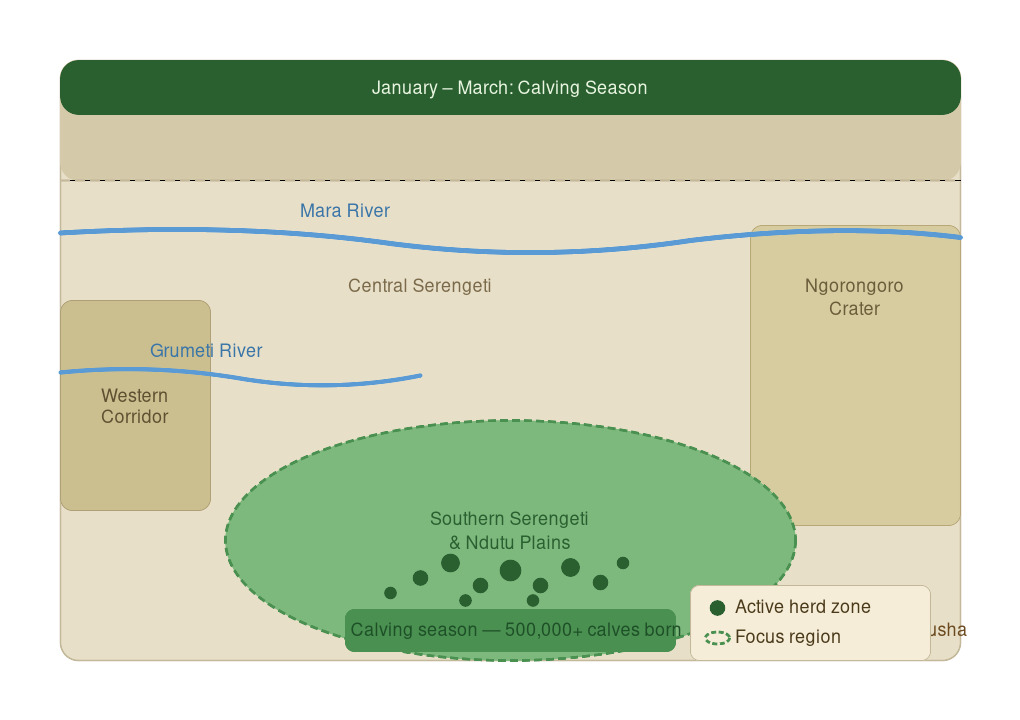
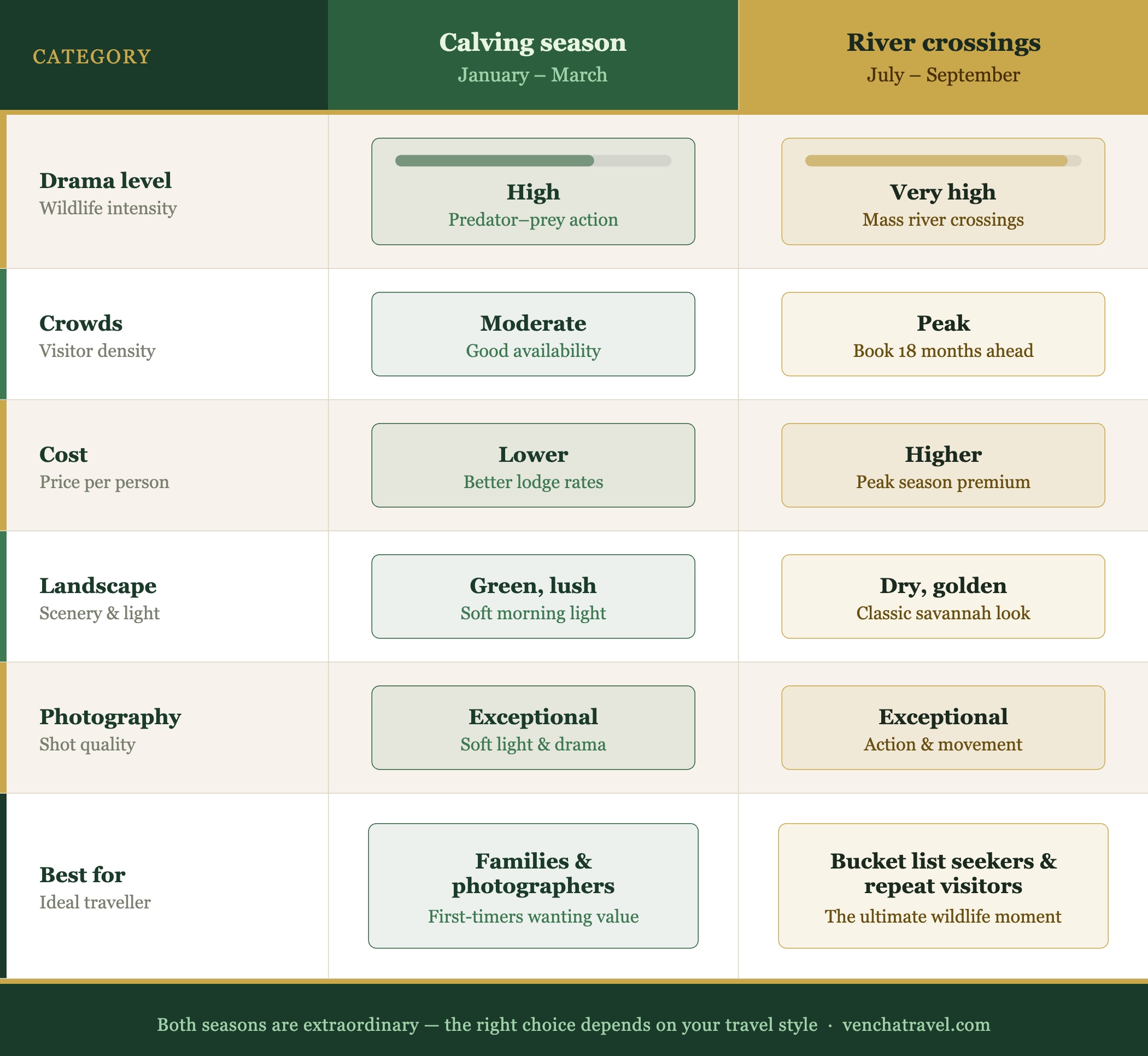
The spectacle: Over 500,000 wildebeest calves are born within a matter of weeks, some estimates put the birth rate at 8,000 calves per day at the peak of the season in February. The Ndutu plains of the southern Serengeti turn an extraordinary green, and with so many vulnerable newborns, predator action is at its most intense. Lions, cheetahs, and hyenas are everywhere.
The experience: This is the season for raw, unfiltered wildlife drama. You'll witness the miracle of birth and, within minutes, the brutal reality of survival. Cheetahs sprint at full speed across open plains. Lion prides coordinate spectacular hunts. It's visually extraordinary and emotionally profound.
Crowds: Moderate. Many travelers overlook this period, which means better availability and lower rates at lodges compared to peak season.
Vencha Travel recommends: Base yourself in the Ndutu area or southern Serengeti. Camps like Lemala Ndutu and Ndutu Safari Lodge put you right in the heart of the calving grounds.
April – May: The Green Season (Central & Western Serengeti)
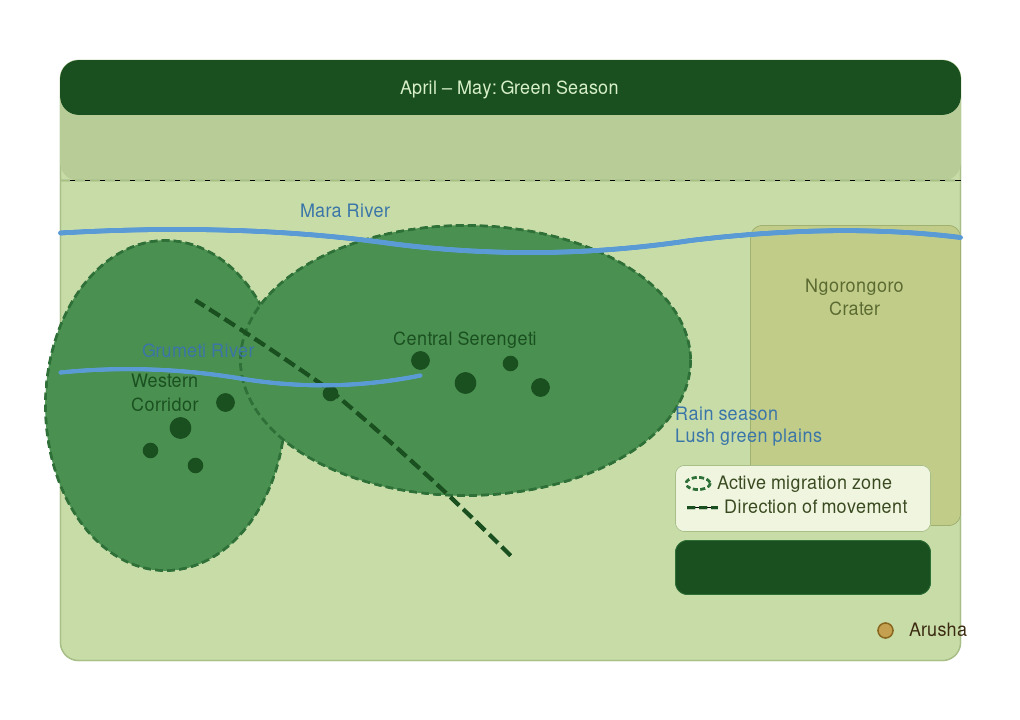
The spectacle: The long rains arrive, turning the Serengeti into a rolling green canvas. The herds begin their northwest movement, spreading across the central plains and the Western Corridor. This is the quietest period for tourism but don't let that fool you.
The experience: The landscape is breathtaking. Wildflowers bloom, birds migrate in, and the park feels genuinely wild and uncrowded. Game viewing is still excellent (resident wildlife doesn't go anywhere), and you'll often have sightings entirely to yourself. The trade-off is occasional heavy rain and some muddy tracks.
Crowds: Low. This is one of the best-kept secrets in African safari travel.
Vencha Travel recommends: If you want an intimate, unhurried Serengeti experience at a competitive price, April and May are underrated. You'll encounter the Migration herds on the move through the central Serengeti dramatic in their own quiet way.
June – July: The Grumeti River Crossing (Western Corridor)
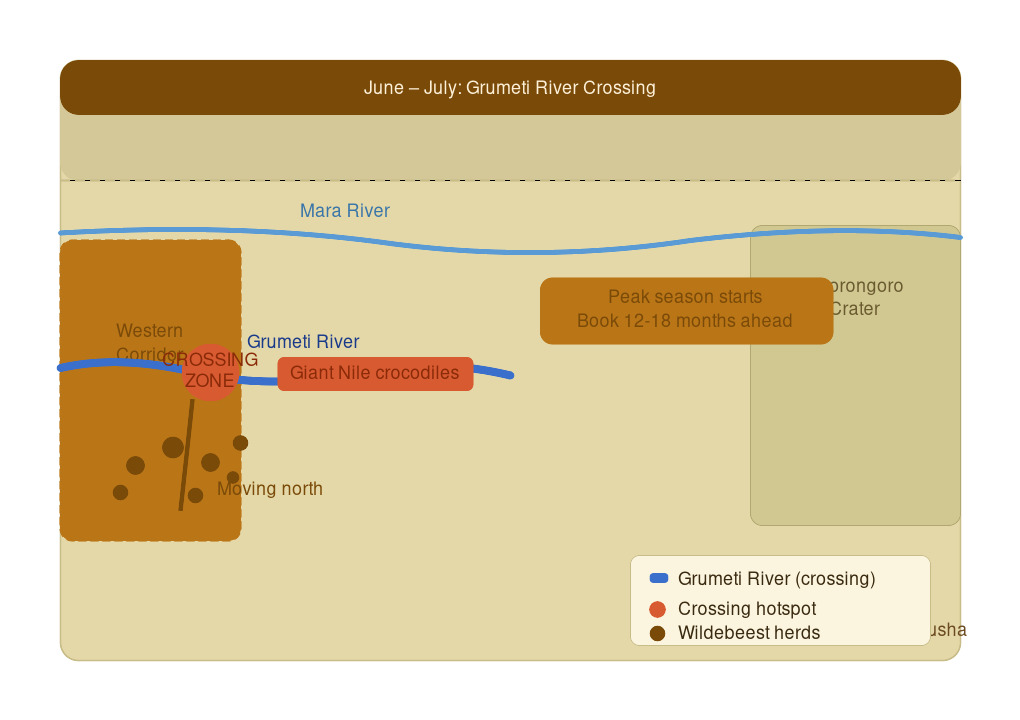
The spectacle: The herds reach the Grumeti River. Unlike the famous Mara River crossings further north, the Grumeti crossing is less well-known but the enormous Nile crocodiles lurking in these waters are among the largest on the continent. The crossings here can be sudden and violent, with thousands of wildebeest surging through the water at once.
The experience: June marks the start of peak season for good reason. The dry season settles in, skies clear, and game viewing becomes exceptional as animals concentrate around water sources. You'll find great concentrations of predators stalking the riverbanks.
Crowds: Building toward peak. Book well in advance twelve to eighteen months ahead for the best camps in this area.
Vencha Travel recommends: Camps positioned along the Grumeti River and in the Western Corridor offer front-row access to crossings with far fewer vehicles than you'd find in the north.
July – September: The Mara River Crossings (Northern Serengeti)
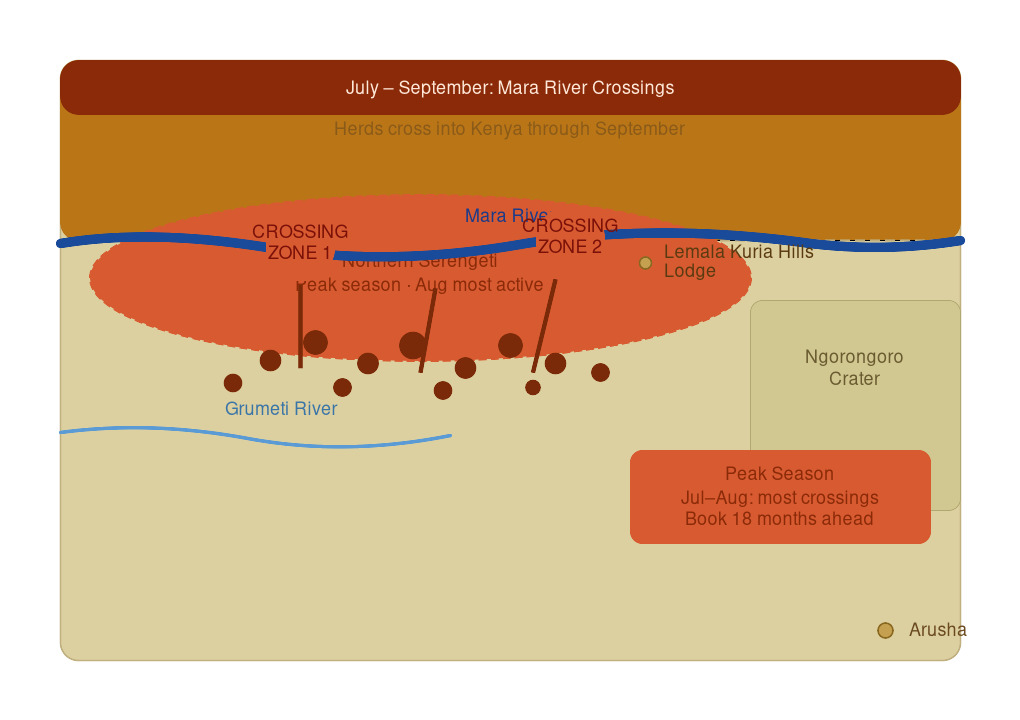
The spectacle: This is the scene from every wildlife documentary you've ever watched. Hundreds of thousands of wildebeest mass on the banks of the Mara River, visibly anxious, before a single animal finally leaps in and chaos erupts. Crocodiles surge from the water. Wildebeest scramble up the opposite bank. Some don't make it. The survivors run on.
The experience: Nothing in the natural world compares to a Mara River crossing. The tension before a crossing begins can last hours. When it happens, it happens fast. The sights, sounds, and emotional weight of it are impossible to fully describe this is why people travel halfway across the world to see it.
Best months within this window: Late July and August are statistically the most active for crossings. September sees the herds beginning to push back east toward Kenya's Masai Mara.
Crowds: Peak season, peak crowds. The northern Serengeti and Mara River are busy. However, with the right camp in the right location particularly private concessions and conservancies you can still enjoy exceptional exclusivity.
Vencha Travel recommends: Camps like Lemala Kuria Hills Lodge (positioned above the Mara River corridor) and Roving Bushtops offer unbeatable access to crossing sites. We choose camps based on guide quality and proximity to actual crossing points not popularity.
October – November: The Return (Eastern Serengeti)
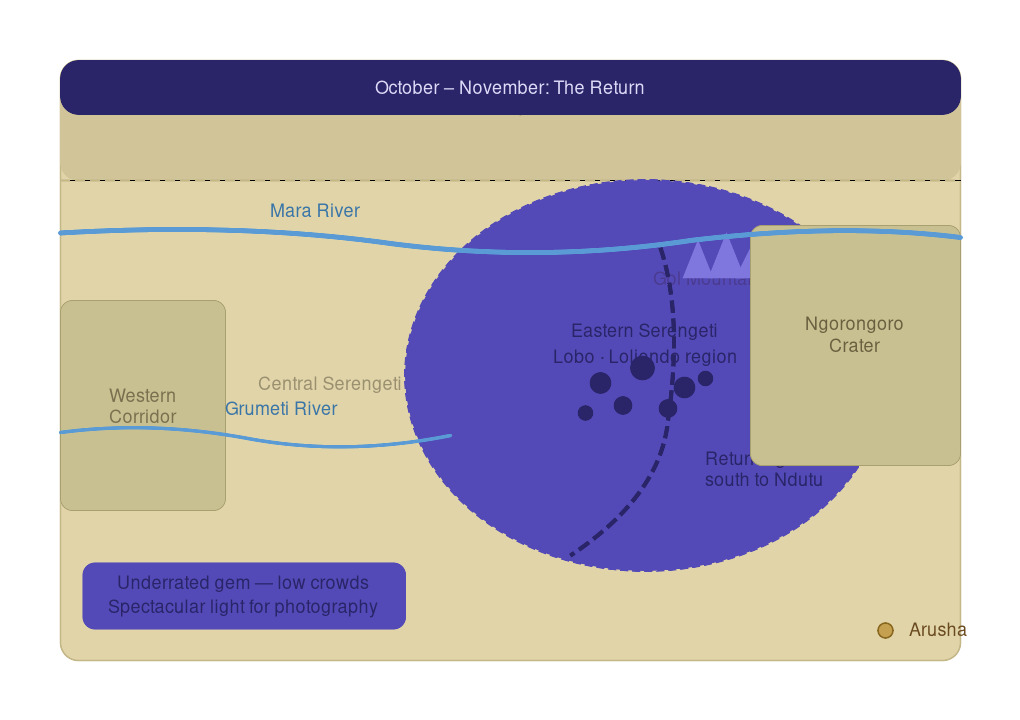
The spectacle: The herds begin their return south, moving through the eastern Serengeti under the Gol Mountains toward Lobo and Loliondo. The short rains arrive in November, greening the southern plains and drawing the wildebeest back toward Ndutu to begin the cycle again.
The experience: October in eastern Serengeti is dramatically underrated. The lighting during this transitional season is extraordinary photographers love it. Crowds thin out considerably. The herds are still enormous, moving through wide-open landscapes.
Crowds: Low to moderate. A fantastic time for the independent traveler who values space over spectacle.
December: Return to the South
The spectacle: Herds pass through the central Serengeti and begin arriving back in the Ndutu region as the pregnant females prepare for calving season. The cycle is completing.
The experience: December in the Serengeti combines end-of-year holiday atmosphere with some of the most cinematic landscapes of the year. The park is busy during the festive period, so book accommodation early but the rewards are significant.
Mara River vs. Grumeti River: Which Crossing Is Better?
Both are extraordinary. The Mara River crossings (July–September) are more dramatic in scale the river is wider, the crocodiles more numerous, and the sheer volume of animals attempting the crossing at once creates scenes of almost surreal intensity. The Grumeti River crossings (June–July) are less crowded and arguably more intimate you may find yourself at a crossing with very few other vehicles, watching enormous crocs ambush the herd.
Our honest recommendation: if you can only do one trip, prioritize the Mara River crossings. If you've done the north before and want something different, the Grumeti is a revelation.
Calving Season vs. River Crossings: Which Should You Choose?
Practical Tips for Planning Your Migration Safari
Book early. The best camps along the Mara River corridor and in the Ndutu region fill up 12–18 months in advance. If you're targeting July or August, start planning now.
Trust your guide over the calendar. Migration timing is governed by rainfall, which is unpredictable year to year. An experienced, locally-based guide who knows the terrain, the seasonal patterns, and the networks of rangers on the ground is worth more than any migration calendar you find online. This is why Vencha Travel's guides, who live and work in Tanzania, consistently deliver sightings that exceed expectations.
Don't fixate on a single crossing. First-time visitors sometimes camp at a crossing site for hours waiting for wildebeest that never come and miss three extraordinary sightings elsewhere. The best safari approach is flexibility: let your guide read the herds and adapt the game plan each day.
Combine with Zanzibar. There's a reason "safari and beach" is the most popular Tanzania itinerary. After days of intense game viewing, the white-sand beaches and turquoise waters of Zanzibar offer the perfect counterpoint. Most of our Tanzania itineraries end with 3–5 nights on the island.
Ready to See the Migration?
The Great Wildebeest Migration is one of those rare experiences that genuinely lives up to the hype and then exceeds it. No wildlife documentary, no photograph, no account from a well-travelled friend fully prepares you for standing at the Mara River as two hundred thousand wildebeest throw themselves into the current.
At Vencha Travel, we design Migration safaris around your travel window, your budget, and what you personally want to witness. We've been doing this from Tanzania for years, and our on-the-ground expertise means every detail from which camp to book to which crossing site to position at on any given morning is informed by real, current knowledge.
Get in touch with our team and we'll put together a Migration itinerary tailored specifically to you. The herds are already moving. Your spot is waiting.
Vencha Travel is a Tanzania-based luxury safari operator specialising in bespoke Serengeti migration safaris, Tanzania Northern and Southern Circuit itineraries, and safari and beach combinations. All itineraries include accommodation, meals, game drives, and airport transfers.
Help Me Plan